
What Is White Label Web Design?
White label web design is a behind-the-scenes partnership: a specialist team does the design and development work, and your agency presents it as its own. You keep the client relationship, set the price, and deliver the result. The partner stays invisible, with no logo, no credit in the code and no contact with your client unless you ask for it.
The term overlaps with a few others:
The same partner can often do all four. The difference is who owns the client relationship and whose name is on the work.
How does white label web design work?
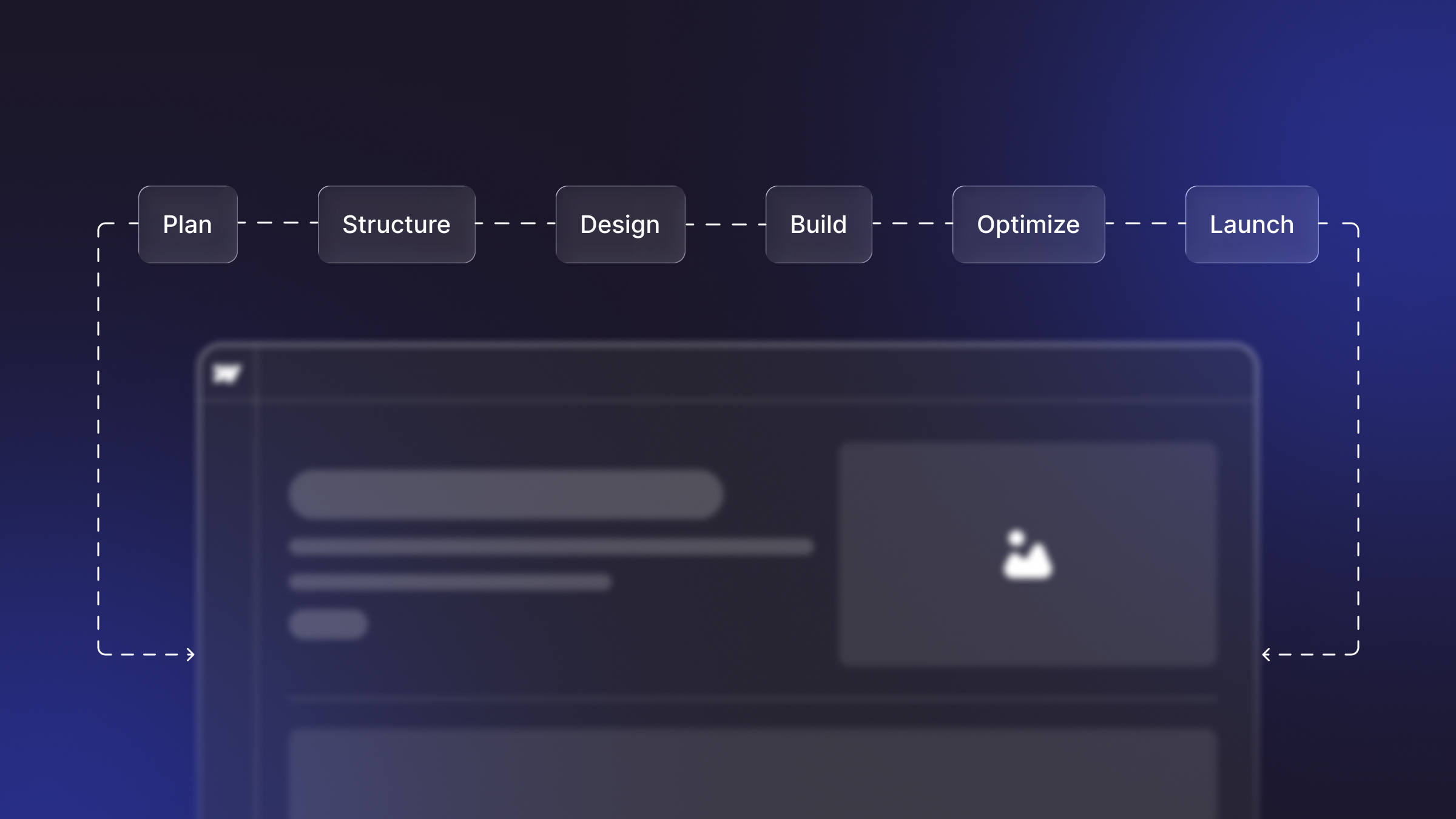
White label web design works in six steps. The partner fits into your agency's process instead of adding a new one:
- You win the client. You scope, price and sign the project under your brand.
- You hand over requirements. Usually a Figma file (or a brief and brand guidelines), a sitemap, content and any integrations such as a CRM, forms or booking tools.
- The partner builds. They work in your tools (Slack, Asana, ClickUp, Jira) and deliver on staging links you can show the client.
- You review and QA. The partner fixes feedback before anything reaches your client.
- You present and launch. Launch happens under your name; the partner handles the technical go-live if you want.
- Ongoing care. The partner can keep maintaining the site, again unbranded, so you can sell a monthly care plan.
The best partnerships feel like extra hands inside your team, not a vendor you manage.
How much does white label web design cost?
White label web design costs depend on the engagement model. Here's what providers publish today:
Three things change the quote more than anything else:
- Design vs development only. Building from your finished Figma file costs less than design plus build.
- Unique page templates and CMS depth. Twenty pages from three templates cost less than ten custom layouts.
- Integrations and migration, for example moving a client from WordPress with hundreds of blog posts.
How to price white label work to your clients
Most agencies price the client project on value and scope, not as a markup of the partner's fee. An example with round numbers:
- A partner quotes $3,000 to build a 10-page Webflow site from your designs.
- You charge the client $6,000–$8,000 for strategy, design, project management and the build.
- Your margin pays for the work you still do: discovery, design, account management, QA and the client relationship.
A dedicated developer changes the math. You pay a fixed monthly cost and every extra project that fits in that month adds margin. The model works once you have enough steady work to keep one developer busy.
What are the benefits and risks of white label web design?
White label web design lets an agency sell more without hiring, but only if the partner's quality and communication match your own.
Benefits:
- More capacity without payroll. You take on more projects without recruiting, training or paying for idle time.
- New services straight away. Offer Webflow, migrations or maintenance without building that skill in-house.
- Focus. Your team stays on strategy, design, sales and clients.
- Recurring revenue. Maintenance and care plans delivered by the partner become monthly income for you.
Risks and how to avoid them:
White-label Webflow Development: What's Different?
White label Webflow development needs a few Webflow-specific decisions that WordPress or Shopify outsourcing doesn't. Settle these before the first project.
Whose Workspace does the site live in?
Build client sites in your agency's Webflow Workspace, or directly in the client's, and invite the partner as a Workspace member. Don't let sites live in the partner's Workspace. Otherwise the partner controls access, and moving the site later becomes a job in itself. Webflow's Freelancer ($16/month) and Agency ($35/month) Workspace plans (billed yearly) are built for this kind of client work. See Webflow pricing for plan details.
Who pays for hosting?
Webflow's Client payments feature lets Workspace owners and admins hand site billing to the client, so the client pays for their own Site plan directly. This keeps hosting costs off your books. Webflow also supports transferring a site (including a paid Site plan) to a client's Workspace from the site's billing settings. Our guide on how to transfer a Webflow site to another account walks through it.
How does your client edit the site?
Plan the CMS and page structure so your client's team can edit content without breaking the design. Agree who trains the client, whether that's you or the partner working under your brand, and record short, unbranded how-to videos for the handover.
What does "no branding" mean in Webflow?
Check that no partner name appears in:
- class names and custom code comments;
- the site's
<head>; - form notification emails;
- the Webflow project name;
- the Loom or handover docs the client sees.
On sites with a paid Site plan, the "Made in Webflow" badge can be removed.
What build standards should you agree on?
Agree on class-naming conventions (Client-First is common), a component library, performance targets and accessibility checks. Then every build feels like it came from one team: yours.
For partners who build from your designs, see our Figma to Webflow development service.
What should a white label contract and NDA include?
A white label contract and NDA should protect three things: your client relationship, your ownership of the work, and your ability to leave. Check for these clauses:
theCSS Agency signs an NDA and a contract with every white-label partner before any work starts.
How do you choose a white label web design partner?
Choose a white label web design partner the way you'd hire a senior team member: check the work, test the communication, and start small.
Questions to ask:
- Which platforms do you specialize in? A partner that "does everything" is rarely expert in Webflow.
- Can we see live sites you've built, and talk to an agency you work with?
- Will we get the same developer every time?
- What hours overlap with our time zone, and how quickly do you respond?
- What's your QA process before we see the work?
- Do you sign an NDA and a non-solicitation agreement?
- How do you price changes and extra revisions?
- Can you handle maintenance after launch, unbranded?
Red flags:
- no live examples you can check;
- no written contract;
- pressure to put sites in their account;
- vague revision terms;
- a different person on every task;
- prices far below the market with no explanation.
Trust signals:
- a platform certification (for Webflow, a Certified or Premium Partner listing);
- reviews on Clutch or G2 from agencies;
- a clear process;
- a paid test project offered before a long-term commitment.
White label web design providers compared
A few providers publish their white label model. Here's how they differ. These are facts from each provider's own site, checked in September 2026:
For a wider list of Webflow specialists, see our roundup of top Webflow development agencies.
How does theCSS Agency work with agencies?
theCSS Agency is a Webflow Premium Partner, rated 4.9★ on Clutch, with 200+ Webflow projects delivered. We work with design and marketing agencies in two ways:
- Per project: a fixed scope and price for each site. This is the right fit when you win Webflow projects now and then. We can build from your Figma file, design under your direction, or migrate a client to Webflow.
- Dedicated developer: a Webflow developer who works only on your agency's work, for a flat monthly fee (this is our monthly retainer). This is the right fit when you have steady Webflow work and want the same person on every project.
Every engagement is covered by a signed NDA and contract. We work in your tools, build in your Workspace or your client's, and never contact your clients unless you ask us to. After launch we can maintain sites unbranded, so you can offer Webflow maintenance plans under your name.
See our Webflow development agency services, or book a call to talk through your pipeline.
FAQs
1. What is white label web design?
White label web design is when a third-party team designs and builds websites that an agency sells to its clients under the agency's own brand. The partner stays invisible, and the agency keeps the client relationship, the pricing and the credit for the work.
2. How much does white label web design cost?
White label web design typically costs from about $750 per project for small builds. Monthly hour plans run about $1,000–$2,100 for 30–60 hours, and a dedicated developer costs about $3,000–$3,500 per month. Design plus development, custom templates, CMS depth and migrations raise the price.
3. Is white label web design legal?
Yes. White label web design is a legal and common business arrangement. The agency buys the work and the rights to it from the partner and resells it under its own brand. A contract should assign intellectual property to the agency and include confidentiality and non-solicitation terms.
4. What is the difference between white label and outsourcing?
White label is a type of outsourcing where the partner's work is presented entirely under your brand, and the partner never deals with your client. General outsourcing can be credited or visible to the client. White label is always invisible.
5. Can you white label Webflow development?
Yes. Webflow development can be fully white labelled. The partner works as a member of your agency's (or your client's) Webflow Workspace, and Webflow's Client payments feature lets clients pay for their own hosting. Sites can be transferred to the client's Workspace at handoff, with no partner branding anywhere on the site.
6. What should be in a white label agreement?
A white label agreement should include:
- confidentiality (NDA);
- non-solicitation of your clients;
- IP assignment to your agency;
- no-attribution terms;
- scope, revision and change-request rules;
- timelines and response times;
- access and credential handling;
- payment terms;
- a termination and handoff clause.
7. How does theCSS Agency price white label work?
theCSS Agency prices white label Webflow work per project (a fixed scope and price) or as a dedicated developer on a monthly retainer. Every engagement is covered by a signed NDA and contract.

.jpg)