
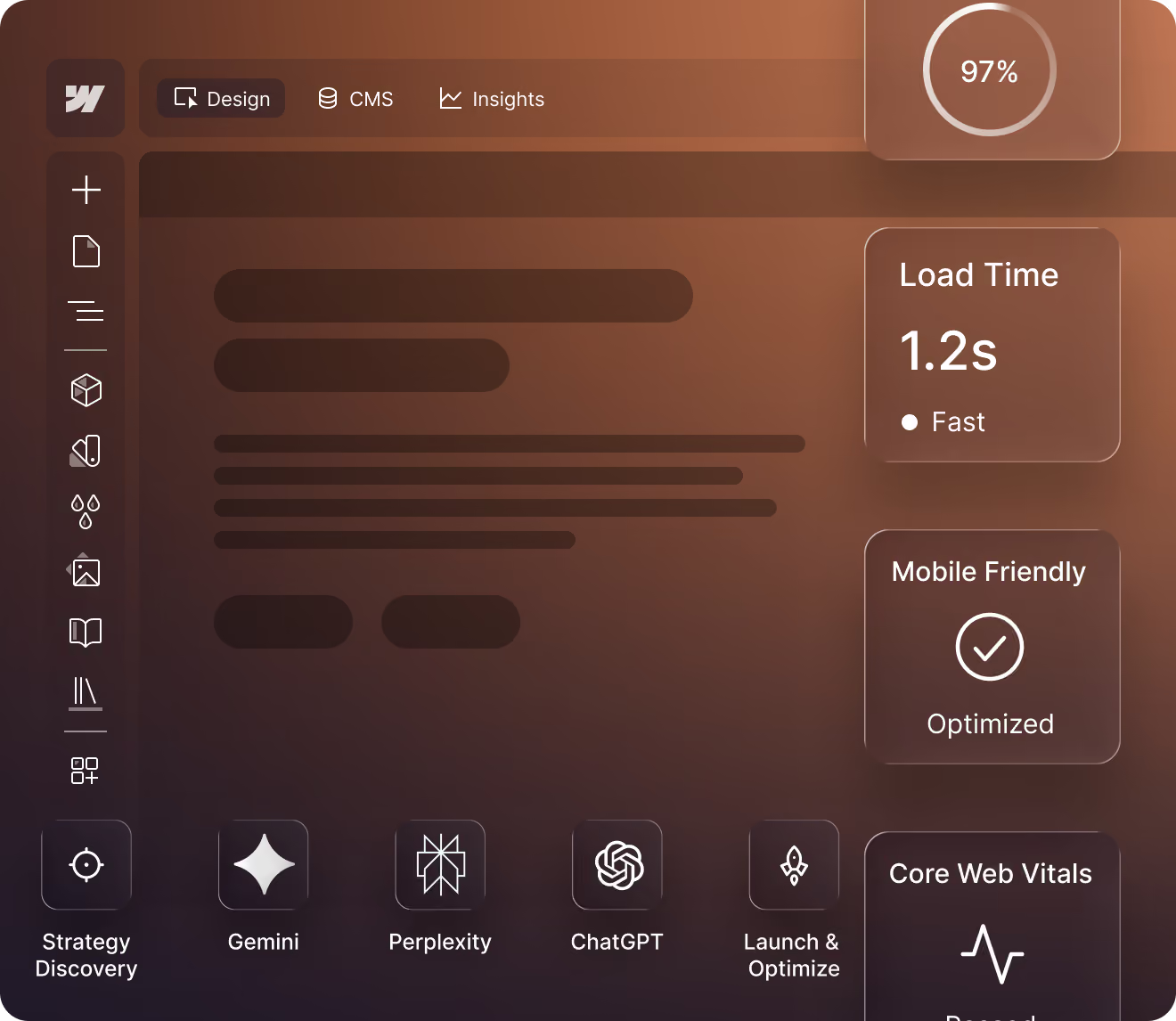







Benefits of SEO & AEO
Higher rankings in Google plus citations in AI Overviews, ChatGPT, and Perplexity. Both channels compound — every fixed page becomes a long-term asset.
Increase Traffic
Higher rankings in Google plus citations in AI Overviews, ChatGPT, and Perplexity. Both channels compound - every fixed page becomes a long-term asset.
High Conversions
Organic search and AI-referred traffic convert higher than paid traffic on most B2B and SaaS sites - intent is qualified. Visitors and AI prompts both surface buyers actively evaluating.
Brand Authority
Ranking on category head terms signals credibility in search. Getting cited by ChatGPT and Perplexity signals it in AI conversations. Both shape how buyers first hear about your brand.
Better User Experience
The work that ranks pages - speed, semantic structure, clear hierarchy, schema - also makes the site easier to read for users, search engines, and AI engines. SEO, AEO, and UX move together.
We Get Results
Competition for category head terms and AI citations keeps tightening. We've built a result-driven SEO and AEO framework that focuses on your specific business — head terms, AI prompts in your category, technical baseline, and content velocity. The same framework we've shipped across 200+ Webflow projects in 15+ countries.
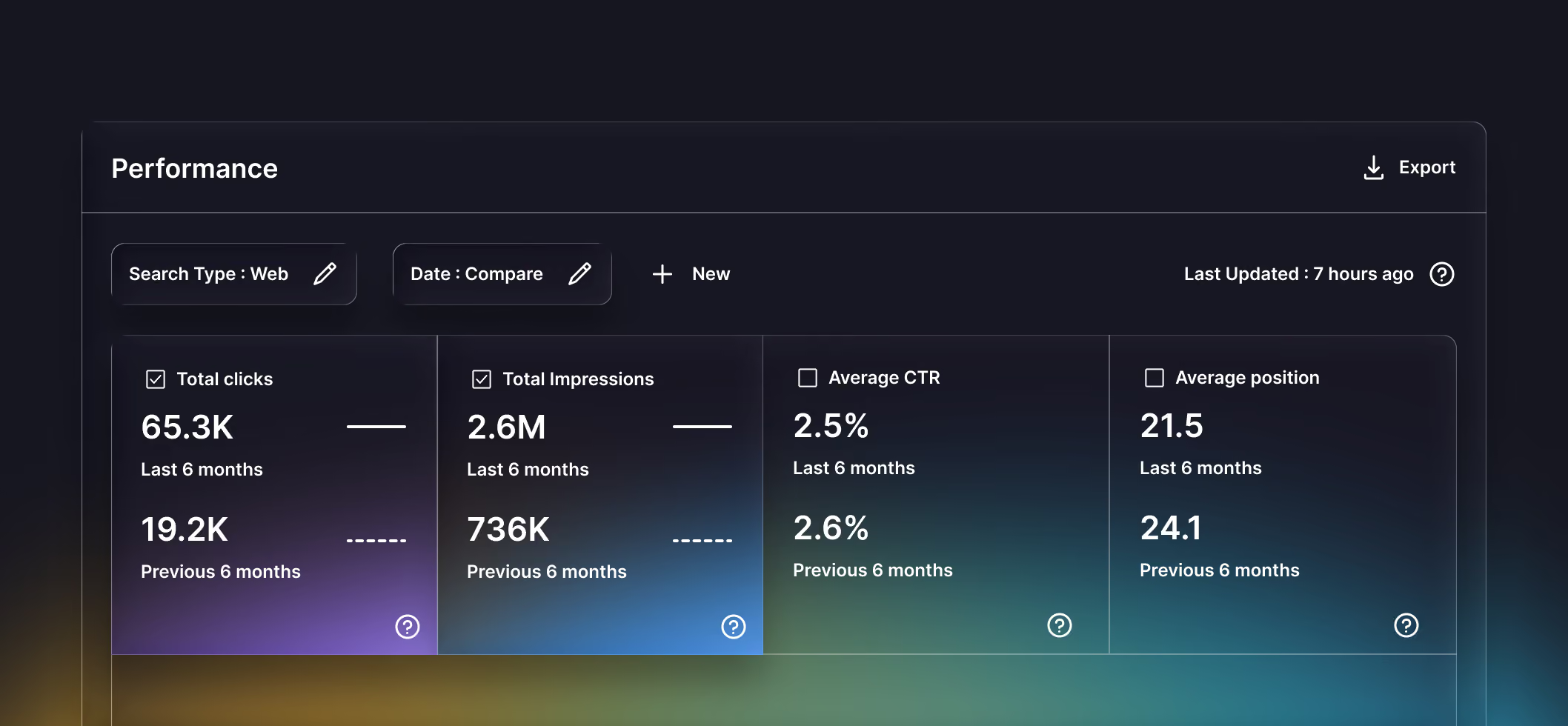
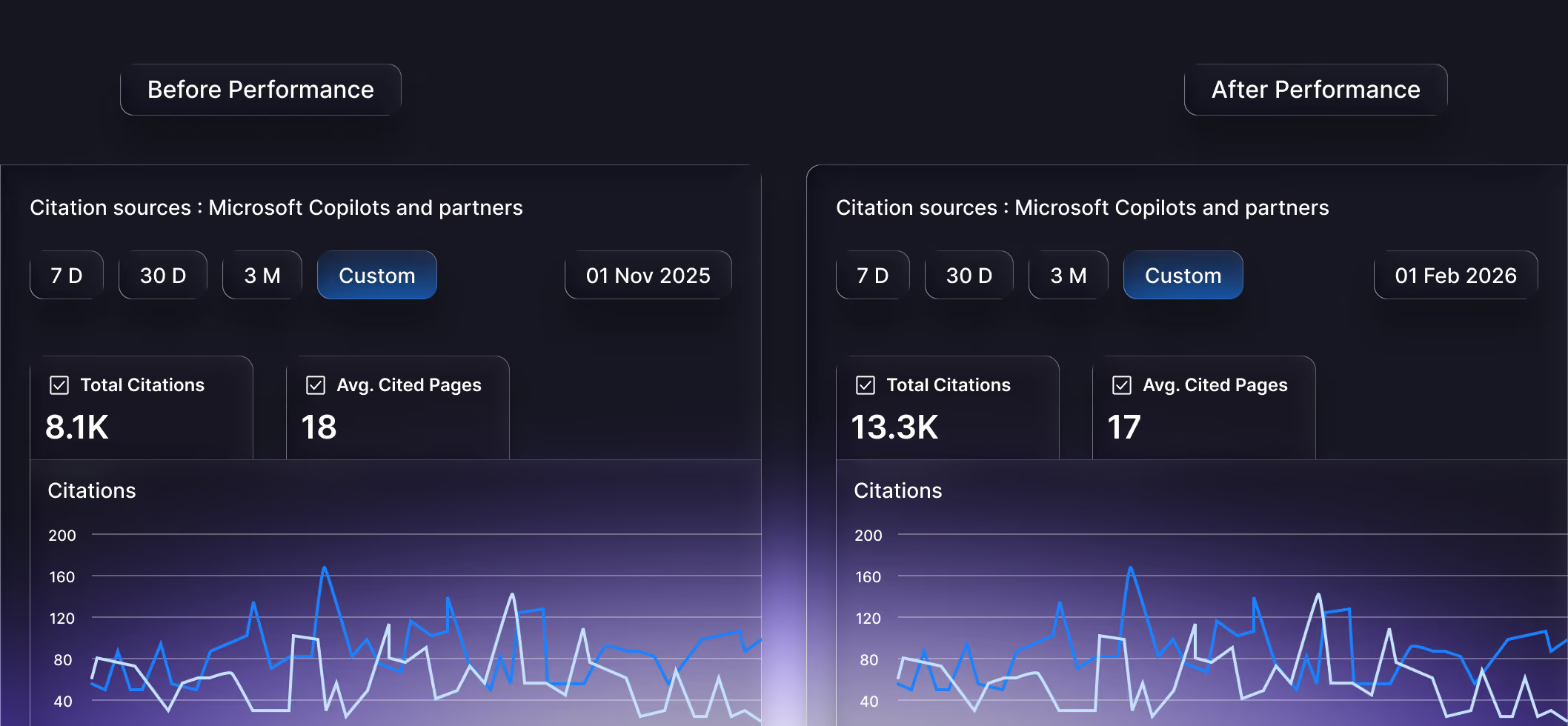
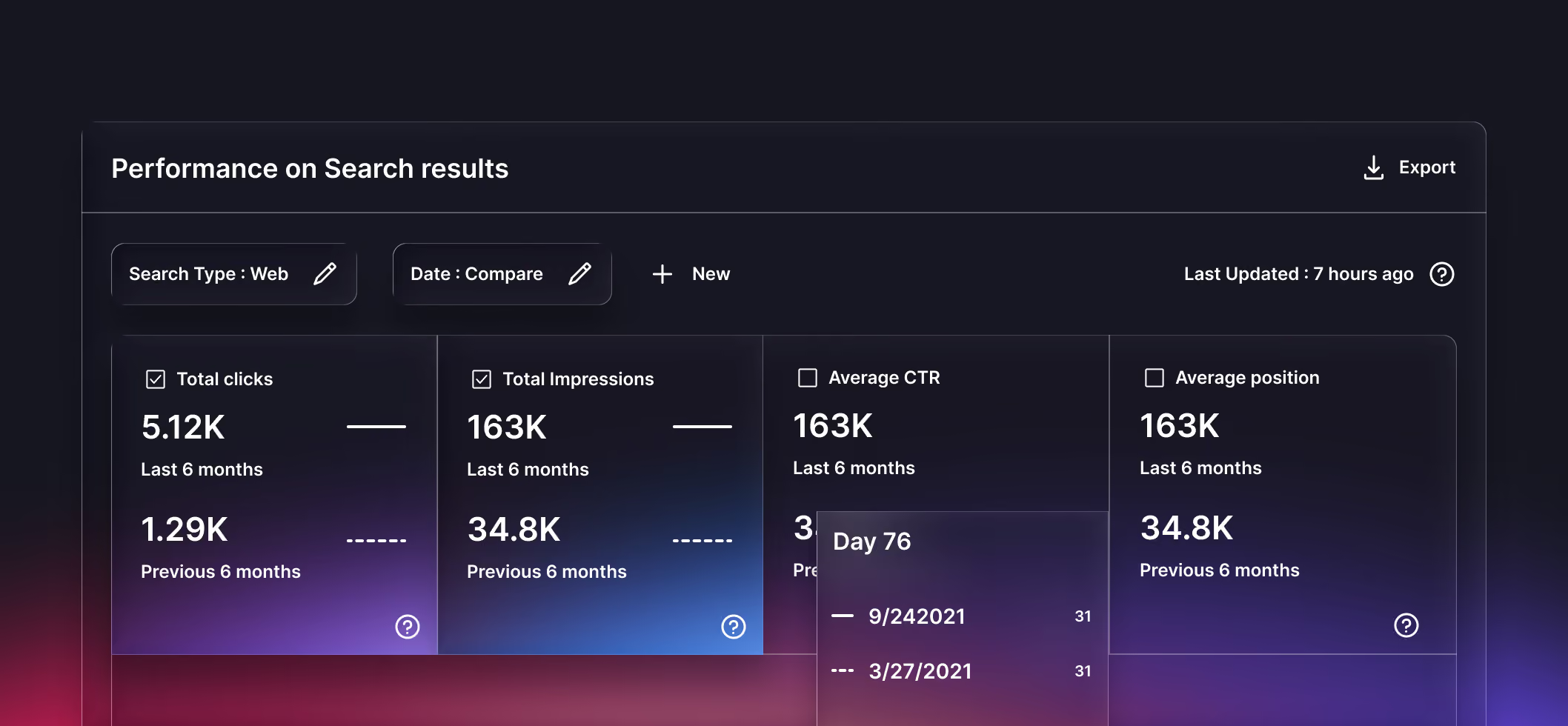
Webflow AEO (Answer Engine Optimization)
Webflow's own AEO platform ships sitewide semantic HTML, llms.txt, schema, and structured CMS data - we extend that with the strategy and content work AI engines actually cite.

Schema & Structured Data for AI
Organization, FAQPage, Article, BreadcrumbList, Product, and HowTo schema - built sitewide or CMS-bound so AI engines can parse your entities and cite them accurately. Most AI misattribution happens when schema is missing or broken.

Content Built for AI Citation
Strong E-E-A-T signals - Experience, Expertise, Authoritativeness, Trustworthiness - are what AI engines and Google both reward. We build them into your site through author bios, schema markup, internal citation patterns, and content sourcing.

llms.txt and AI Crawler Setup
Native llms.txt deployment, robots.txt rules for AI crawlers (GPTBot, ClaudeBot, PerplexityBot, Google-Extended), and structured metadata that gives AI engines a curated entry point into your site.

AEO Tracking - Share of Voice, AI Mentions
Monthly reports on AI Overview appearances, ChatGPT citation rate for your category prompts, Perplexity source mentions, and share of voice against competitors. The signal Google Search Console doesn't surface yet.

On-Page SEO
Per-page meta tags, H1/H2 hierarchy, semantic structure, internal linking with keyword-rich anchors, image alt text, and Quick Answer blocks at the top of pages. Optimized for both Google rankings and AI Overview citation.

Technical SEO
Our Webflow SEO checklist covers 40+ checkpoints including Core Web Vitals (LCP, INP, CLS), schema markup, internal linking, and CMS field configuration - all aligned with current Webflow SEO best practices.

Content SEO
Topic clusters, content gap analysis, blog batch optimization, FAQ additions, definition-led paragraphs, and content depth review. Structured to answer search queries and AI prompts at the same time.

Local SEO
Google Business Profile setup and optimization, LocalBusiness schema, location-page structure, NAP consistency, and review management - for service businesses with a physical location or local catchment area.

Conversion Rate Optimization
A/B testing, CTA placement, form friction audits, and conversion path analysis. SEO and AEO bring traffic. CRO converts it. See our CRO audit service

Keyword Research
Head terms, long-tail clusters, AI prompt research, and search intent mapping. We map what people search in Google and what they ask in ChatGPT, Perplexity, and Gemini - then build content for both.

Competitor Analysis
Competitor SERP positions, AI citation share, content gaps, technical wins, and SERP feature analysis. Where competitors rank or get cited better, we identify why. Where they're weaker, we move on it first.

Custom SEO & AEO Strategy
No one-size-fits-all retainers. Strategy is shaped per client - head terms, AI prompt visibility, business model, content velocity, and technical baseline. Output: a prioritized 90-day plan with effort and expected impact for each item.

Website Structure Review
Site architecture, internal linking, CMS Collection schema, canonical handling, and crawl depth analysis. Structure is the layer where most Webflow sites lose ranking potential and AI citation eligibility without realizing it.

SEO & AEO Reports
Monthly Google Search Console pulls, ranking reports, AI citation tracking, and priority adjustments based on what's actually moving. Transparent - you see what shifted in search and in AI mentions, and what's planned next.
Why choose theCSS Agency as your ideal SEO & AEO Partner
Work with a Webflow SEO expert who's shipped 150+ websites across 15+ countries - not a generalist who treats Webflow like WordPress.

Rankings and AI citations focused, not just audit-focused.
Most agencies sell deliverables - audits, reports, slide decks. We sell movement. We measure success in GSC position shifts, AI Overview appearances, organic clicks, and conversions, not in document length. If rankings or AI citations aren't moving, the work isn't done.

Native Webflow execution, not workarounds.
We know what Webflow does natively for SEO and AEO, what needs custom code, and where the platform breaks at scale. Schema as CMS-bound fields. Sitewide llms.txt. Native redirects. No hacky plugins or duct-tape fixes that break on the next platform update.

Webflow Premium Partner certified.
The top 5% of agencies in the Webflow ecosystem - vetted by Webflow on craft, delivery, and client outcomes. It's not a badge we paid for. It also gives us a direct line to Webflow's team on platform updates including their AEO rollout.

Direct communication. No account-manager layer.
You work directly with the team doing the SEO and AEO work. No project managers translating between you and the actual implementation. Slack channel for fast turnaround. Most updates happen in hours, not days.

Fair pricing. No contract lock-in.
Month-to-month retainers. Pause or cancel any time, no fees. Transparent scope and pricing - what you pay for is what gets shipped. Audits start at $600. Ongoing retainers start at $1,500/month.
We stay on it until rankings and AI citations move.
SEO and AEO are feedback loops, not fixed-scope projects. We pull GSC and AI citation reports monthly, watch what's moving, and adjust the work toward what's actually shifting. Most clients stay on retainer past the initial 90 days because the compound results justify it.
Our Key Steps in Starting an SEO & AEO Service
Transparent process. Clear milestones. No surprises.
Understanding the Business
We start by understanding your audience, business model, revenue channels, and the gap between where rankings are and where they need to be.
Website Audit
Full technical audit, GSC analysis, AEO baseline check, competitor review, and Core Web Vitals. Output: a prioritized fix list organized by impact and effort across both SEO and AEO.
Strategy Development
90-day SEO + AEO plan covering technical fixes, content priorities, schema deployment, and on-page work. Built around the head terms and AI prompts that actually move your business.
Keyword & Prompt Research
Head terms, supporting clusters, AI prompt mapping, and search intent analysis. We focus on what's rankable for your domain in 90 days, plus the prompts AI engines are answering in your category.
On-Page Optimization
Meta tags, headings, internal linking, schema, FAQ blocks, and Quick Answer sections. Done across hub pages, service pages, and existing blog content - for both search and AI citation eligibility.
Content Strategy
Topic clusters, content calendar, definition-led structure, and existing-content optimization. Most sites have 50–200 posts that need restructuring before new content adds value to either SEO or AEO.
AEO Deployment
Schema sitewide, llms.txt setup, AI crawler permissions, semantic HTML cleanup, and citation-friendly content structure. The technical foundation AI engines need to cite your brand accurately.
Monitoring and Reporting
Monthly GSC pulls, ranking reports, AI citation tracking, and priority adjustments. SEO and AEO are feedback loops - we iterate toward what's actually moving in rankings and in AI mentions.
Is SEO Worth It for Small Businesses?
Yes. SEO is one of the most cost-effective channels for small businesses - qualified traffic, no per-click cost, compounding results. Webflow makes the technical side easier than most platforms, so the budget goes further into strategy and content.
What Is SEO?
SEO stands for Search Engine Optimization - improving your website's ranking in search results for relevant keywords. On Webflow, SEO covers technical setup (schema, sitemap, redirects, Core Web Vitals), on-page structure, content depth, and internal linking.
How Does SEO Work?
Search engines rank sites on hundreds of signals - content relevance, technical health, page speed, backlinks, schema, and user behavior. Webflow gives you a strong technical baseline by default *- clean HTML, native sitemap, fast hosting. The work is making sure on-page, content, schema, and links are set up to compete.
How Long Does SEO Take to Work?
Technical fixes start affecting rankings within 2 to 6 weeks of Google re-crawling. Content and structural changes take 8 to 12 weeks for meaningful ranking movement, and 4 to 6 months for compound results.
What is Answer Engine Optimization (AEO)?
Answer Engine Optimization (AEO) is the practice of structuring your website so AI answer engines - like ChatGPT, Google AI Overviews, and Perplexity - can understand, trust, and cite your content accurately. It combines clear question-and-answer content, structured data (schema), and strong entity signals so your brand appears inside AI-generated answers, not just traditional search results.
Is Webflow good for SEO?
Yes. Webflow gives you clean semantic HTML and full control over meta titles, descriptions, heading structure, alt text, and URL slugs, plus automatic sitemaps, SSL, 301 redirects, and fast global hosting. It lacks WordPress's plugin ecosystem, so some SEO tasks are more manual - which is where an agency adds value through schema, CMS architecture, and Core Web Vitals tuning.
Do you handle Webflow migrations and SEO together?
Yes - that's the cleanest version of the engagement. Migration plus SEO setup as one project means URL mapping, 301 redirects, schema, and Core Web Vitals all happen as part of the launch. See our Webflow migration services
Is Webflow good for AI search and getting cited by ChatGPT?
Yes, when it is set up for it. Webflow's clean HTML and schema support make it well suited to Answer Engine Optimization. Getting cited by ChatGPT, Perplexity, and Google AI Overviews also depends on structured question-and-answer content, FAQ and Organization schema, strong entity signals, and an llms.txt file - all of which we implement as part of our AEO service.
How do I get my website cited by AI engines?
To be cited by AI engines, your website needs self-contained answers to real questions, structured data (FAQ, Organization, and Article schema), consistent entity signals across the web, and clear topical authority. theCSS Agency audits and implements all of these so AI engines can find, trust, and quote your content accurately.
How long does AEO take to show results?
Faster than SEO. Schema and llms.txt changes affect AI engine indexing within 1–3 weeks. Citation appearances in ChatGPT, Perplexity, and AI Overviews typically start surfacing in 4–8 weeks after deployment. Compound results - share of voice gains, sustained citation rate - take 3–6 months.
What does technical SEO on Webflow actually cover?
Schema markup, Core Web Vitals, canonical handling, XML sitemap, llms.txt, robots.txt, 301 redirect strategy, internal linking, image optimization, and CMS architecture for dynamic SEO.
What does Webflow AEO include natively?
Webflow ships automatic semantic HTML, native schema markup, built-in llms.txt files, sitemap, robots.txt, and structured CMS data. Webflow also recently launched an AEO platform for Enterprise customers with agentic recommendations and AI citation analytics. We extend Webflow's native AEO foundation with the strategy and content work AI engines actually cite.
Do I need AEO if my SEO is already working?
Yes - and arguably more so. If your SEO is working, you have content AI engines could be citing right now. Without AEO setup, that content gets misattributed, cited incorrectly, or not cited at all. AEO captures the visibility upstream of Google clicks. It's not optional in 2026.
Is AEO available for non-Enterprise Webflow sites?
Webflow's native AEO platform is Enterprise-only in 2026. But the AEO work that matters - schema, semantic HTML, llms.txt, content structure, citation tracking - works on any Webflow plan. We deliver AEO outcomes on Workspace and Site plans every week.
Which One Is Better, SEO or Google Ads?
They serve different jobs. Google Ads buys traffic instantly but stops when you stop paying. SEO compounds - slow start, then traffic keeps building. Most growth-stage companies run both.
What is AEO?
Answer Engine Optimization (AEO) is the practice of structuring your site so AI engines - ChatGPT, Perplexity, Google AI Overviews, Gemini - cite your content accurately when prospects ask questions about your category. AEO overlaps with SEO on the technical side (schema, semantic HTML, content structure) but the goal is citation in AI answers, not just ranking in Google.
How do you track AEO performance?
Monthly reports on AI Overview appearances, ChatGPT citation rate for your category prompts, Perplexity source mentions, share of voice against competitors, and AI-referred traffic. AEO tracking is a newer discipline than SEO tracking - we use a combination of manual prompt testing, third-party tools, and Webflow's own AEO analytics where available.
Can I Do My SEO Myself?
Yes - basic SEO is learnable, and Webflow's native controls make implementation easier than most platforms. Where teams hit a ceiling: technical schema at scale, CMS architecture, competitive strategy, and content depth across 50+ pages. That's usually when an agency engagement makes sense.
Can you fix SEO issues on a Webflow site built by another agency?
Yes. About a third of our SEO work is on sites we didn't build. We run an audit first to map the existing setup, then prioritize fixes by impact and effort. Webflow projects transfer between agencies in a few clicks.
Why does AEO matter in 2026?
According to Webflow's 2026 State of the Website Report, 52% of marketing leaders will optimize for AI-driven search this year. 60% of AI answers currently misrepresent brand information when AEO isn't set up. And organic traffic is down 15–25% across industries as AI Overviews capture click intent before users hit traditional results. Brands that don't show up in AI answers lose visibility upstream of the SERP.
How is AEO different from SEO?
Traditional SEO optimizes for ranking in a list of links; AEO optimizes for being quoted inside an AI-generated answer. SEO targets keywords and rankings, while AEO targets clarity, structured data, and citation. A modern strategy needs both, because AI answers increasingly sit above traditional search results.
Can you optimize for ChatGPT, Perplexity, and Google AI Overviews?
Yes - same underlying work optimizes for all of them. Schema, semantic HTML, structured content, definition-led paragraphs, FAQPage markup, and clear entity declarations. We test against all major AI engines and adjust based on which are most relevant for your audience and category.
What's the difference between Webflow SEO and regular SEO?
The fundamentals are identical - technical setup, on-page optimization, content quality, internal links, and authority. What changes is the execution layer. Webflow ships with clean semantic HTML, hosted infrastructure, and built-in Core Web Vitals - so you skip the plugin fights and theme bloat that slow most WordPress sites down. The trade-off: a few SEO tasks (like programmatic content at scale or advanced redirect rules without Enterprise) need workarounds. We handle both sides.
What's included in a Webflow SEO checklist?
A complete Webflow SEO checklist covers: page titles and meta descriptions (per page and CMS-bound), H1/H2 hierarchy, internal linking, canonical tags, XML sitemap, robots.txt, image alt text and compression, Open Graph tags, schema markup (Organization, Article, FAQ, Breadcrumb), Core Web Vitals (LCP, INP, CLS), mobile responsiveness, 301 redirect mapping for migrations, structured CMS field setup, and analytics tracking. Our audits cover 40+ checkpoints across these areas.
Does Webflow CMS help with SEO?
Yes - significantly. Webflow CMS lets you bind meta titles, descriptions, schema markup, Open Graph tags, and canonical URLs directly to CMS fields, so every collection item ships with SEO baked in. Collections also enforce consistent URL structure and let you build topic clusters at scale without breaking site architecture. The CMS handles dynamic sitemaps automatically. Webflow's hosted infrastructure ensures fast load times - a direct ranking factor.
Connect with our SEO & AEO Expert
Whether you need traditional SEO, AEO setup, or both - we'll diagnose what's holding the site back in search and AI engines and tell you exactly what it'll take to move. Book a 30-minute call to discuss scope, timeline, and what's possible.
 Free 30-minute discovery call (SEO, AEO, or both)
- Honest scoping - no pressure, no pitch deck
- Transparent pricing